A year ago I ran into the great Larry Crane (Audio and Mastering Engineer, Educator, Studio Owner, etc…) of Jackpot Studios and Tape Op at a trade show and we were joking about how terrible a modular would be in a recording studio because clients would just burn down the clock making synth basses and bleeps and bloops. It was funny at the time, but I was totally wrong.
These days, about half of my modular use is processing DAW audio to create things I would never stumble upon with plugins. For recording engineers, especially those chasing innovative mixing techniques, character, texture, or sonic unpredictability, a Eurorack modular synthesizer can become more than a synth. It’s a flexible sound design platform, a hands-on automation playground, and—sometimes—an absolute wildcard in the best way possible.
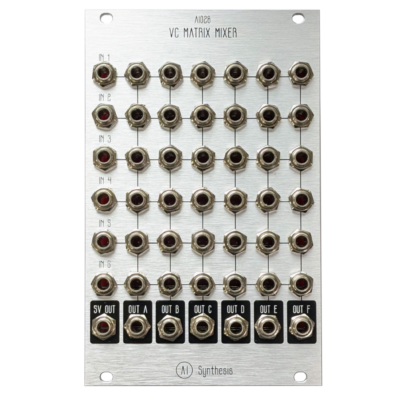
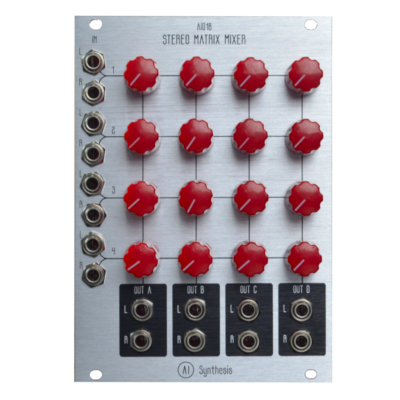
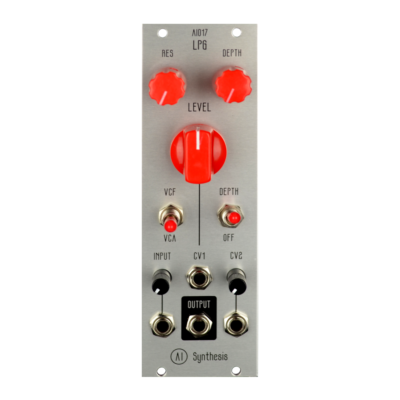
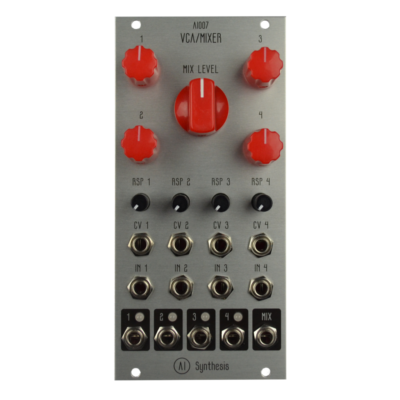
Modular does a few unique tricks. While you can automate any parameter in a DAW, in modular you can use voltage, including audio signals to modulate parameters. VCAs can be used in pairs and inserted wherever you like to create complicated, organic modulation sources, matrix mixers allow for creative feedback patches to use and abuse existing hardware, analog filterbacks are amazing at creating creative EQing you can’t quite pull off in the box. Let’s break down how modular fits into a modern recording workflow, without all the mysticism.
CV: Automation, But Alive
Control Voltage—CV, if you’re new to it—might sound exotic, but in many ways, it’s just old-school automation with a pulse. Eurorack has traditional modulators like LFOs, but audio is voltage too, and you can use that audio to modulate filters. A Kick drum track can be used to modulate a high pass filter on bass, creating a unique sidechain effect. Instead of dragging breakpoints in your DAW, you’re twisting knobs, assigning real-time modulations, or letting random sources drive variations. With voltage-controlled matrix mixers, signal flow can be automated creating tightly controlled or chaotic effect chains and feedback loops.
When you automate a filter cutoff in your DAW, it follows a fixed path. But when that same parameter is controlled by an LFO, envelope follower, and/or even the amplitude of a kick drum or pad from another channel… it breathes. It’s reactive. It’s alive.
You start treating mix parameters like musical instruments, rather than static settings. That’s a game-changer—especially for mixing engineers looking to add motion or “push-pull” dynamics to a session without resorting to overused side chains.
Re-Amping? Try Re-Patching.
You already know the joys of re-amping guitars through different amps, pedals, or even boutique outboard gear. Now imagine running that same audio—guitar, synth, drum stem, even vocals—through a Eurorack system instead.
Want to add analog saturation? Use a wave-folder or a tube module. Need to deconstruct a snare? Patch it into a resonant filter, then modulate the cutoff with a sequencer running at half-speed.
Modular lets you treat audio like clay, not just waveforms. Matrix Mixers can be used as effect sends to audio effects and create feedback loops. It’s not about realism; it’s about character. And when you’re aiming for something a little left-of-center—something with some teeth or texture—it’s faster to patch than it is to scroll through plugin presets.
Rhythms Without a Grid: The Anti-Quantize Approach
Recording engineers who work with hip hop, jazz, ambient, or indie genres know this instinctively: perfection can be sterile.
Modular sequencers, clocks, and logic modules often operate outside the strict quantization of DAWs. This gives you a rhythm section that breathes—not perfectly timed, but intuitively groovy. Think lo-fi hats that shuffle just a hair late, or tape-style flutter from a CV-driven delay.
You can still sync to MIDI or clock if you want, but sometimes… you don’t. That freedom can feel like switching from Pro Tools to tape, just without the maintenance headaches.
It’s Not Just About Synth Sounds
Here’s a weird truth: a lot of modular systems don’t even have oscillators. Or at least, not in the traditional sense. And that’s because Eurorack isn’t just about generating tones—it’s about shaping them.
You can use function generators to sculpt transients, shape dynamics, or mimic compression behaviors with side-chaining patches. Feed in a vocal, and use an envelope follower to trigger subtle changes to reverb tails. Take a bass guitar and run it through a resonant low-pass filter for a moody, dub-style roll-off.
Suddenly, your modular rig feels less like a synth and more like an extension of your outboard rack. Just weirder. And more fun.
A Gateway to Happy Accidents
Honestly, this might be the biggest reason to give modular a chance: it invites the unknown.
There’s a certain magic when you patch up something, not entirely sure what you’re going to get—and end up with a sound that stops you cold. It’s the same thrill as recording drum bleed and realizing it sounds better than the close mic. Or hitting record before the band is ready and capturing that take.
You can’t plan those moments. But you can set up systems that increase your odds. Modular is one of them.
The Gear You Already Know—But Rewired
Look, no one’s saying you should replace your LA-2A or 1073 clone with a Eurorack system. That’s not the point.
But many modules are conceptually familiar. Filters behave like EQs. VCAs echo compressors. Delays, spring reverbs, noise sources—they’re all there. Just… unhinged from presets and menus. Rewired for creativity.
And once you get used to patching modulation sources into expected places—then into unexpected ones—your ears open up. Suddenly, you’re designing tools as you use them. That’s rare. And honestly, pretty addictive.
So… Do You Need It?
Nope. But if you’re the kind of engineer who enjoys experimenting, who likes gear that fights back a little, or who gets bored scrolling through the same plugin GUIs day after day… modular might just light a fire under your workflow and become your favorite problem child in the studio.